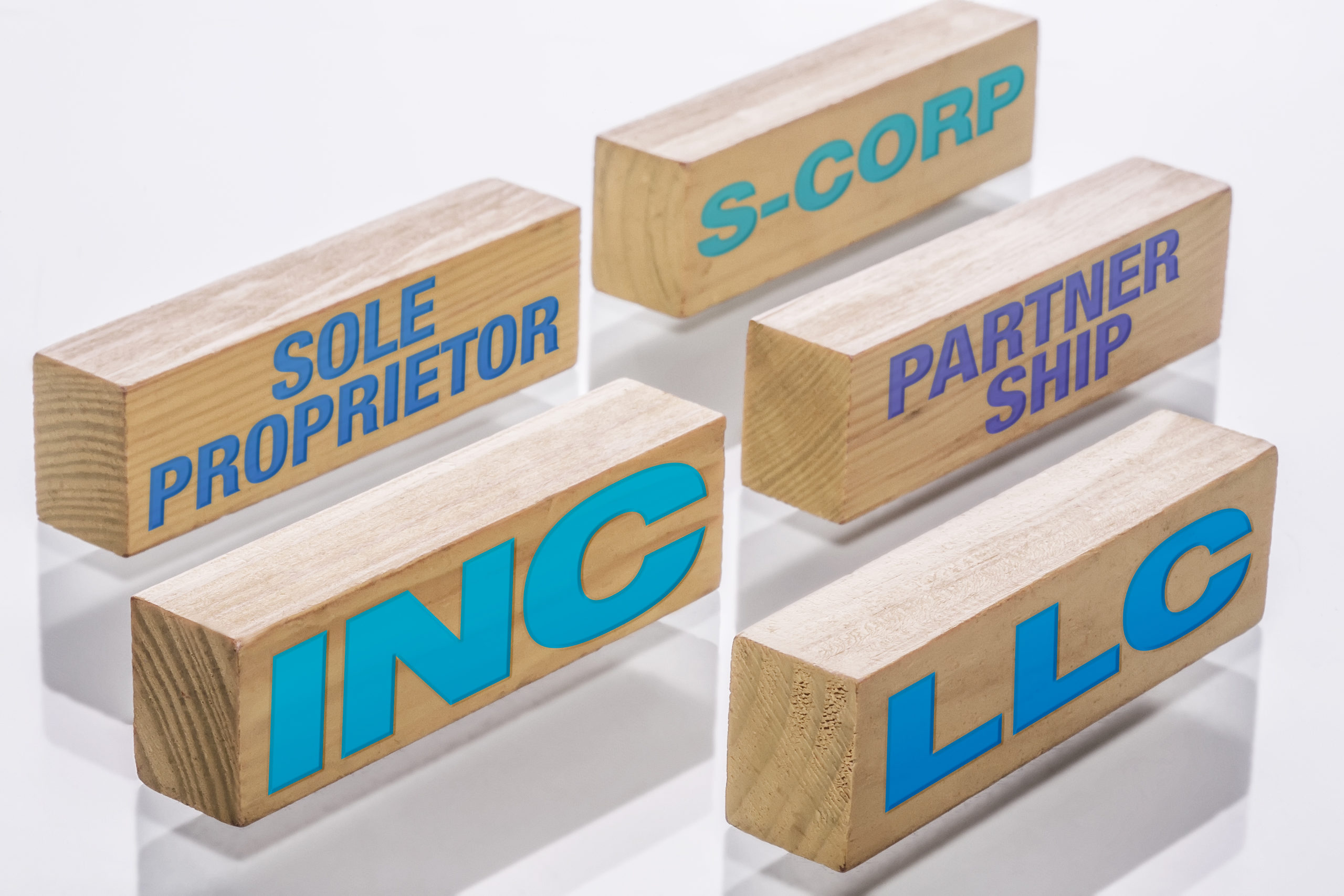
The small Real Estate investor and LLC’s.
😁 So, you want to invest in 🏠 Real Estate!
There are many options for running a Real Estate investment business.
- A sole proprietorship 🧍 also referred to as a sole trader or a proprietorship, is an unincorporated business that has just one owner who pays personal income tax on profits earned from the business. It offers no liability protection.
- A Limited Liability Partnership 👫 is a flexible legal and tax entity that allows partners to benefit from economies of scale by working together while also reducing their liability for the actions of other partners.
- A Limited Liability Corporation (LLC) provides greater liability protection than individual ownership and may have perpetual existence.
- A Real Estate Investment Trust (REIT) is a company that owns, operates, or finances income-generating real estate. They are subject to SEC regulation.
There are other options, like forming a full corporation but, the above four are the most practical.
In this article we will explore the advantages and disadvantages of an LLC for an investor.
An LLC is a “limited liability company,” which has some features of both partnerships and traditional corporations. It provides greater liability protection than individual ownership and may have perpetual existence. However, an LLC is also somewhat simpler to manage than a traditional corporation.
An LLC is a hybrid form of business entity which has selected features of a corporation and a partnership. It has been structured in a way to benefit from the pass-through taxation feature of a partnership along with allowing flexibility in operation and management and yet have limited liability like in the case of a corporation.2 In the U.S., the LLCs laws are governed by individual states but are recognized in all. The laws further vary across countries. The “owners” of the company in the case of LLC are referred to as “members”. Usually a single person can start an LLC and there is no upper ceiling on the number of members. There are many established and well-known companies which are structured as LLCs. A few names are Chrysler Group LLC, Westinghouse Electric Company LLC, Dougherty & Company LLC. Some businesses like banks, insurance, medical services are ineligible to file as LLCs because of the “liability” protection given to LLCs.
Advantages
Limited Liability
This is one of the features of a LLC in which it resembles the corporations. LLC provides its owners a protective shield against business debt and liability.
Taxation
The company is not taxed directly by IRS as an LLC is not considered a separate tax entity. Instead, the tax liability is on the members who pay through their personal income tax. Because of non recognition of LLC as a business entity for taxation purposes, the tax return has to be filed as a corporation, partnership or sole proprietorship. Remember that certain LLCs are automatically classified by IRS as a corporation for tax purposes, so be sure to know if your business falls in this category. Those LLCs which are not automatically classified as a corporation can pick the business entity of choice by filing Form 8832. The same form is used in case the LLC wants to change the classification status.
Less Hassles
Among all forms of companies, the start-up of an LLC is easier with lesser complexities, paperwork and costs. This form of company comes with a lot of operational ease with less record keeping and compliance issues. LLCs also provide a lot of freedom in management as there is no requirement of having a board of directors, annual meetings or maintaining strict record books. These features reduce unnecessary hassles and help save a lot of time and effort.
The formation of an LLC broadly requires filing the “articles of organization” which is a document including basic information like business name, address, members. The filing is done with the Secretary of State for most states and has an associated filling fee. Next comes creating an Operating Agreement which is not mandatory in most states but is recommended especially for multi-member LLCs. On registration of the business, other licenses and permits have to be obtained. Additionally, some states like Arizona and New York require publishing about the LLC formation in the local newspaper.us.
Flexibility in Allocation
An LLC provides a lot of flexibility when it comes to investing as well as profit sharing. In an LLC, members can opt to invest in a different proportion than their ownership percentage i.e. a person who owns 25% of the LLC, need not contribute money in the same proportion for initial investment. This can be done by creating an operating agreement which states percentages of company profits (and losses) for each member regardless of the amounts of their initial investments. So, it’s possible to have an outside investor put money in the business without ownership. The same applies to distribution of profits where LLC members have the flexibility to decide the allocation of profits. The distribution of profits can be in a different proportion than ownership. A certain member may take a bigger chunk of profits by consensus for the extra hours or effort he/she has put in carrying out the business.
Disadvantages
While a limited liability company (LLC) offers an edge over some of the other forms of business entity, there are also some drawbacks which need to be looked at before selecting an LLC as the business structure.
Limited Life
The life of an LLC is limited by the tenure of its members. While there can be variations across states, in most of them the business is dissolved or ceases to exist when a member departs an LLC further requiring the other members to complete the remaining business or legal obligations needed to close the business. The rest of the members can choose to set-up a new LLC or part ways.
This weakness of an LLC can be overcome by including appropriate provisions in the operating agreement.
Self Employment Taxes
The members of an LLC have to pay the self-employed tax contributions towards Medicare and Social Security as they are considered as self-employed. Due to this the net income of the business is subject to this tax. To avoid this, depending upon the business turnover and tax burden, the entity can choose to be taxed like a corporation if it works out to be more beneficial.
Consult an accountant before making this choice.
Fees
The fee which is typically paid by an LLC as initial costs or ongoing charges is more than that for business entities like sole proprietorship or general partnership but less than what a C-corporation has to pay. The various types of fees include – applicable state filing fees, ongoing fees, annual report fees, etc.
Less Legal Precedence
LLC is a relatively newer business structure and thus there have not been many law cases related to them. For this reason there is not much legal precedent or case law for LLCs as there is for the older forms. Having a certain legal precedence helps to act accordingly in the same given case scenario. There is more vulnerability as there are few established laws.
Bottom Line
An LLC is a good combination of protection with flexibility and tax benefits. It provides an array of taxation alternatives while shielding individual members from personal liability. LLCs are seen as apt for small businesses as there is less hassle and complexity in its functioning. However, consulting an accountant and/or a lawyer for expert opinion is advisable before making the final decision.